

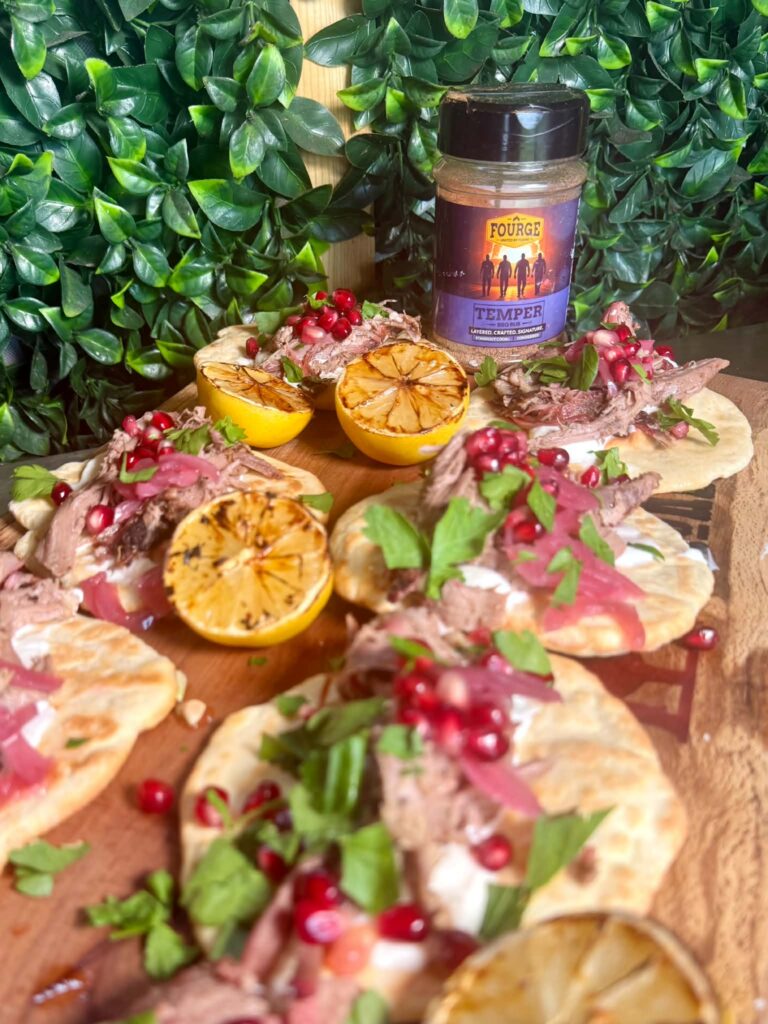
We’re taking a bone-in lamb shoulder, letting TEMPER do the flavour heavy lifting, then smoking it low and slow over apple wood until it gives up like it owes us money. The lamb gets colour and bark first, then finishes gently in a tray with onions and stock until it’s soft enough to pull without a fight. While it rests, the Kamado Joe gets shut down and the FlexFlame steps in for quick, no-drama flatbreads on a hot pizza stone.
Trim any loose or scruffy bits from the lamb shoulder, but leave a good amount of fat in place for flavour and moisture. If needed, lightly score the fat cap to help the seasoning grip and render during the cook.
Season the lamb all over with TEMPER, making sure you cover the top, bottom, sides and any folds in the meat. Place the lamb on a rack or tray and leave it uncovered in the fridge overnight.
This helps the surface dry slightly, allows the rub to settle in, and gives you a better base for smoke, colour and bark the next day.
Take the lamb out of the fridge while you light and stabilise the Kamado Joe. Leave it on the rack or tray while the BBQ comes up to temperature.
Do not leave it out for hours. This stage is just to take the edge off the fridge chill while you get set up.
Set the Kamado Joe for indirect cooking and stabilise it at 120–130°C. Add 1–2 chunks of apple wood to the charcoal.
Let the smoke clean up before adding the lamb. You want thin, clean smoke rather than thick white smoke. Apple wood gives a softer, slightly sweeter smoke that works well with lamb and the TEMPER seasoning.
Insert your Typhur probe, or another meat probe, into the thickest meaty part of the lamb shoulder.
Avoid touching the bone, placing the probe in a fat pocket, or setting it too close to the surface. The temperature reading is a guide, but final doneness should always be judged by tenderness.
Place the lamb on the Kamado Joe over indirect heat. Close the lid and let it cook.
This first stage is about building smoke flavour, colour and bark. The lamb will not be tender yet, so avoid opening the lid too often.
Hold the Kamado Joe at 120–130°C and smoke the lamb for around 3–4 hours. Start checking properly when the internal temperature reaches around 65–70°C.
Look for a good colour, set rub, a surface that no longer looks wet, fat starting to render and bark beginning to form. Do not wrap based on temperature alone. The bark and colour should look right before moving to the next stage.
Keep cooking the lamb covered. Start checking tenderness from around 90°C internal. It will likely finish somewhere around 93–96°C, but temperature alone is not the final decision.
The lamb is ready when a probe slides in with little resistance, the meat feels soft, the bone wiggles, and the shoulder looks like it will pull apart easily. If it still feels tight, continue cooking.
Once the lamb is tender, keep it covered and rest it for at least 1 hour. You can rest it in the covered tray, wrap the tray in towels, place it in a cool box, or hold it in an unheated oven.
Resting helps the meat relax and keeps the juices in the lamb.
While the lamb rests, mix the Greek yoghurt, grated garlic, lemon juice, olive oil and salt in a bowl.
Taste and adjust if needed. If the yoghurt is too thick, loosen it with a small splash of water. The sauce should be creamy, sharp and fresh to balance the richness of the lamb.
Mix the self-raising flour, Greek yoghurt, salt and olive oil in a bowl. Bring everything together into a dough, then knead briefly until smooth enough to roll.
Rest the dough for 20 minutes. Divide it into 6–8 balls, then roll each one to around 2–3mm thick.
Set up the FlexFlame with the pizza stone and preheat it to 280–300°C. Let the stone heat all the way through before cooking the flatbreads.
The hot stone helps the flatbreads puff, colour and cook quickly while staying soft in the middle.
Cook each flatbread directly on the dry pizza stone with no oil. Cook for around 60–90 seconds per side until they bubble, puff slightly, get brown spots and pick up a little char.
Stack the cooked flatbreads under a clean tea towel as they come off. This helps them steam slightly and stay soft.
Cut the lemons in half and char them cut-side down on the FlexFlame, griddle or another hot surface until they pick up colour.
The charred lemon adds acidity and a light smoky edge, which helps balance the richness of the pulled lamb.
Open the tray and save the juices. Pull the lamb into chunks and strands, keeping some texture rather than shredding it too finely.
Mix a little of the tray juice back through the meat to keep it moist. Taste before adding more seasoning or extra juice.
Start with a warm flatbread, then add a smear of garlic yoghurt. Top with pulled TEMPER lamb, pickled red onions, fresh herbs, a squeeze of charred lemon and optional chilli oil.
Add a small spoon of tray juice if needed, then serve while the flatbreads are warm.
The lamb shoulder timing is flexible. For a 2.6kg bone-in shoulder, allow around 7–9 hours total including the cook and rest. Lamb shoulder doesn’t care about your dinner schedule, so build in wiggle room.
Don’t wrap by temperature alone. Around 70–75°C is the usual tray/wrap point, but only do it once the bark and colour look right.
The final internal temperature will usually land around 93–96°C, but tenderness is king. Probe soft, bone wiggle, meat relaxed — that’s the finish line.
You can hot hold the lamb after resting if needed. Keep it covered in the tray, wrapped in towels in a cool box, or in a low/unheated oven until guests are ready.
Pickled red onions from a jar are absolutely fine. Homemade is lovely, but jarred onions are pink, sharp and get the job done.
For extra heat, drizzle chilli oil over the finished flatbread.
Thank you for trying out this recipe! I hope it brings joy and flavour to your table. For more delicious recipes and BBQ tips, visit Smoke & Sear. Happy grilling! Cheers, Lee.